Work-Life Balance: The Solution to High Turnover of Software Engineers?
Work-life balance ensures that individuals have enough time and energy for both their professional responsibilities and personal life. For remote software engineers, maintaining this balance can be more challenging due to the lack of physical separation between work and home. It's crucial for companies to recognize this challenge and implement strategies to help their employees manage it effectively.
Maintaining a healthy work-life balance is not just a trend or a corporate buzzword—it’s a measurable factor that influences both personal and professional success. Research shows that a good work-life balance improves employee satisfaction, reduces stress, and increases retention rates across industries. For software engineers, this becomes even more relevant, since their roles often involve long work hours, high cognitive demand, and continuous deadlines that blur the line between work and personal life.
When it comes to attracting and retaining valuable tech talent, being able to guarantee that balance becomes a strategic goal. According to a study by Zippia (2023), 72% of workers believe work-life balance is a very important factor when choosing a job, and 57% of job-seekers say a poor work-life balance is a dealbreaker when they’re considering a new job.
This becomes even more relevant when we consider its influence on workplace well-being. 86% of software engineers work fully remotely, according to a Turing survey (2024); additionally, the Global Work-Life Survey (Remote, 2023) revealed that remote workers are happier than office workers. On a scale of 1 to 10, 42% rated their level of happiness at least an 8, in contrast to only 21% of those who work in-person. This close relationship between remote work and higher well-being conditions gives the software industry a significant advantage over other sectors. In a context where major tech companies are considering returning to in-person work or at least a hybrid model, this is a significant point to analyze.
However, remote work does not guarantee work-life balance: many of us who work remotely have felt at some point that our work interfered with our free time. For example, a study by Buffer in 2023 found that 22% of remote workers struggle with unplugging after work, underscoring the need for clear boundaries and support. An imbalance between work hours and free time can affect not only their sense of well-being but also their physical and mental health. Beyond extrinsic motivation (financial compensation for their work, rewards, positive feedback, career advancement), project overload on few people, suffocating deadlines, or very high demands can lead to burnout. At that point, the worker's intrinsic motivation is at risk: the pleasure of doing their tasks, the passion for that field of knowledge, their interests, dreams, and the sense of internal reward upon completing tasks. Many of these aspects are reinforced by good use of free time, hence the importance of maintaining their availability of mental and physical energy.
Maintaining balance between work and personal life allows employees to recharge and improve time management. It also helps reduce stress and prevent burnout. When engineers have time to rest, exercise, socialize, or spend quality time with friends and family, they return to work with more energy and focus. Good work-life balance contributes to creativity and problem-solving, both essential in software engineering.
Improving work-life balance should be a shared responsibility between company and employee. The company should provide flexibility and support systems, while individuals must learn to manage their time effectively, set boundaries, and prioritize self-care. Time management training or mentorship programs can help employees improve their work-life balance and make more intentional use of their personal time.
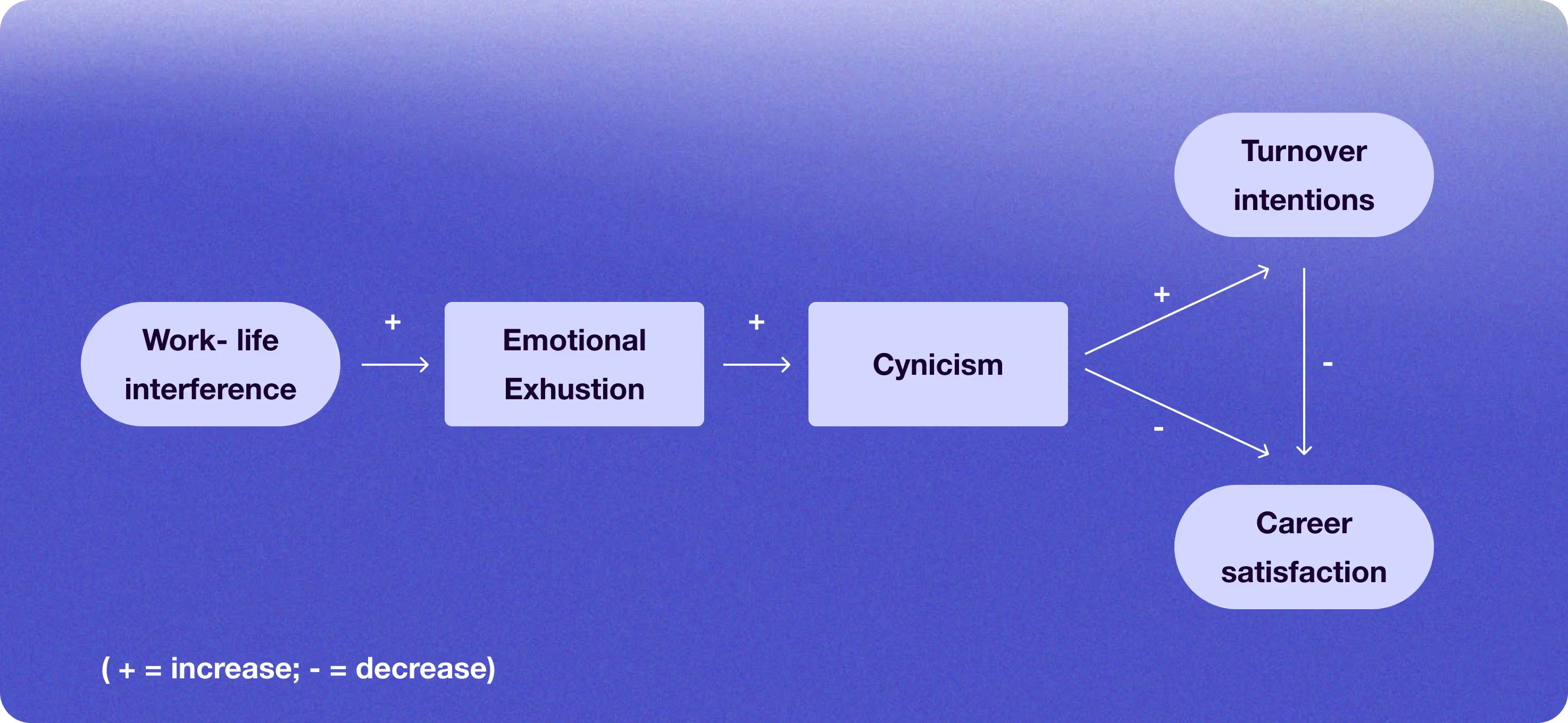
Returning to burnout caused by interference in work-life balance, the study "Striking a Balance between Work and Play: The Effects of Work–Life Interference and Burnout on Faculty Turnover Intentions and Career Satisfaction" (Boamah, Hamadi, Havaei, et al., 2022) directly relates it to the intention to change companies, as clearly illustrated by this chart:
Balancing the Scale
Recapping: taking care of work-life balance impacts work environment, well-being and health, as well as talent retention and your business results. Research shows that maintaining a healthy work-life balance has direct benefits for productivity and long-term engagement. So, what initiatives can be implemented in this regard? These are just a few of the many points we consider at Devlane to ensure work-life balance, which contributes to the average tenure of a software engineer at our company being 1 year and 9 months. In fact, 72% of the engineers who started at Devlane’s founding are still working with us.
- Encourage engineers to set and stick to regular work hours, while being flexible. This helps create a routine and ensures they have time to unwind and engage in personal lives. Managers should respect these hours and avoid contacting employees outside of them unless absolutely necessary. Flexibility is a key benefit of remote work. Allow engineers to set their schedules within reason and accommodate different time zones or personal commitments. This flexibility can lead to higher productivity and job satisfaction.
- Talk to your team about this topic directly. Let them know it is important to you as a company and as a leader. Create a culture where taking time off is encouraged and not frowned upon. Regularly remind employees of the importance of vacations and personal days. This can be reinforced by leadership taking time off themselves and sharing their experiences.
- Help engineers manage their workload by setting realistic expectations and goals. Avoid overloading them with tasks and ensure that deadlines are reasonable. This prevents stress and burnout.
- Create dialogue spaces. Whether one-on-one meetings or group meetings, it is important to create places for honest and direct conversations about the level of well-being and adaptation to the project's demands.
- Regularly update the perks and benefits you offer. This boosts morale, mood, and collaboration in remote teams. Dedicate time and resources to discovering what your workers need, what would make their day-to-day easier, and ensure they receive rewards and support after meeting important objectives.
- As mentioned earlier: it's not all about salary. Take care of their extrinsic motivation, but also their intrinsic motivation by giving them projects that excite them, the opportunity to research topics of interest, and creative activities that relieve the feeling of monotony.
Having a good work life balance is a continuous process. It’s about being aware of the signs of fatigue, knowing when to stop, and building a sustainable routine. Companies that support this mindset not only retain their employees longer but also foster happier, more motivated teams that can grow personally and professionally together.
Ultimately, achieving and maintaining a healthy work life balance means creating a space where both personal and professional goals can coexist without conflict. Employees who can dedicate time to their families, passions, and rest are more focused, resilient, and innovative at work. Supporting this balance is no longer just a perk, it’s a key strategy for retaining talent and ensuring sustainable growth.
Thinking about scaling your software development team? We find, promote, and retain top talent to ensure your long-term growth. Schedule time to talk with our tech talent experts here.
.avif)


Other Blog Posts
Work-Life Balance: The Solution to High Turnover of Software Engineers?

Why hire Latin American Developers for your business?

Why Diverse Teams Drive Innovation